We are living in the age of personalization. Open your smartphone, and the news feed is curated with stories that pique your interest. Scroll through a streaming service, and the “Top Picks for You” section seems to know your mood better than you do. Shop online, and the recommended products feel like they were handpicked by a savvy personal stylist. This is not a coincidence or a simple matter of tracking your last click. It is the result of a sophisticated, pervasive, and often invisible force: Artificial Intelligence (AI). AI has quietly become the chief architect of our digital realities, designing a world that is tailored, responsive, and uniquely individual. This transformation goes far beyond simple convenience; it is reshaping the very fabric of our online interactions, the economy of attention, and the future of human-computer interaction. To navigate this new world effectively, both as consumers and as digital creators, we must understand the mechanisms, the profound implications, and the ethical considerations of an AI-driven digital ecosystem.
The Engine Room: Deconstructing the Core AI Technologies Behind Personalization
To comprehend how AI designs our digital world, we must first look under the hood at the specific technologies powering this revolution. It is a complex interplay of data, algorithms, and iterative learning.
A. Machine Learning (ML) and Deep Learning: At its core, Machine Learning is a subset of AI that allows systems to learn and improve from experience without being explicitly programmed for every task. Instead of following rigid, pre-written rules, ML models are trained on vast datasets. They identify patterns, correlations, and probabilities within this data. For instance, an ML model for Netflix might analyze billions of data points what you watch, when you stop watching, what you search for, what users with similar tastes enjoy to predict what you might want to watch next. Deep Learning, a more advanced technique inspired by the human brain’s neural networks, takes this further. It uses complex, multi-layered algorithms to process data in non-linear ways, enabling even more nuanced understanding. This is what powers image recognition on Pinterest or the speech-to-text accuracy on your voice assistant.
B. Natural Language Processing (NLP): This is the technology that allows machines to understand, interpret, and generate human language. When you type a query into Google Search or ask a question to Amazon’s Alexa, NLP is at work. It breaks down your sentence into its grammatical components, discerns intent, and context. Modern NLP models, like Google’s BERT or OpenAI’s GPT series, have become exceptionally good at understanding the subtleties of language, including sarcasm, sentiment, and ambiguity. This allows for more accurate search results, sophisticated chatbots, and the generation of human-like text, which is increasingly used for everything from writing product descriptions to drafting email responses.
C. Collaborative and Content-Based Filtering: These are the two primary recommendation techniques. Collaborative filtering, famously used by Amazon in its early days with the “customers who bought this item also bought…” feature, works by analyzing user behavior and finding similarities between users. If User A and User B have liked and disliked similar items in the past, the system will recommend items that User B liked to User A. Content-based filtering, on the other hand, focuses on the attributes of the items themselves. If you consistently watch science-fiction movies directed by Christopher Nolan, a content-based system will recommend other sci-fi movies or other works by Nolan, regardless of what other people are watching.
D. Predictive Analytics: This is the culmination of the above technologies. By analyzing historical and current data, AI models can forecast future outcomes and behaviors. An e-commerce site uses predictive analytics to forecast which products you are most likely to purchase in the next month. A music streaming service like Spotify uses it to predict which new song release you will add to your playlist. This predictive power is what makes personalization feel almost psychic, as the digital world seems to anticipate your needs before you even articulate them.
The Personalized Panorama: AI in Action Across the Digital Landscape
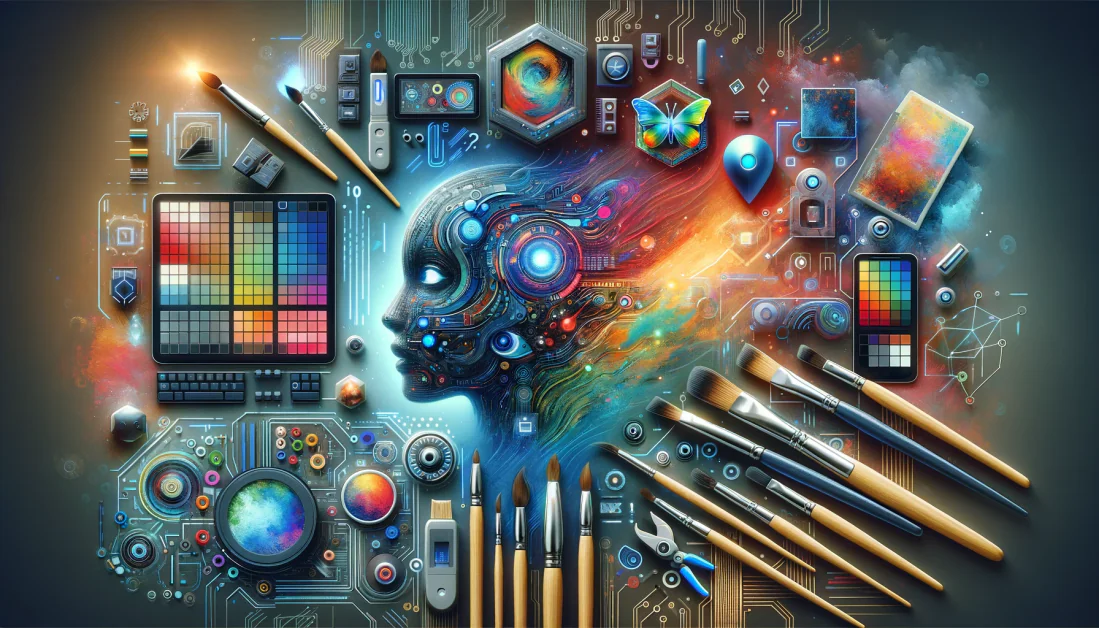
The application of these AI technologies is not confined to one corner of the internet. It is a universal phenomenon, touching every major platform and service we use daily.
A. Social Media Feeds: The Algorithmic Curator of Attention: Platforms like Facebook, Instagram, TikTok, and Twitter (X) are perhaps the most potent examples of AI-driven personalization. Your feed is not a chronological list of posts from people you follow. It is a dynamically generated stream, meticulously ranked by an AI algorithm whose primary goal is to maximize your engagement the time you spend on the platform. The algorithm evaluates thousands of signals for every piece of content: the poster’s relationship to you, the type of content (video, image, text), your past interactions with similar content, its current popularity, and even the sentiment of the comments. This creates a highly engaging but often insular environment the infamous “filter bubble” where you are primarily shown content that reinforces your existing interests and beliefs.
B. E-Commerce and Retail: The Ultimate Digital Shopkeeper: From Amazon to small Shopify stores, AI is the engine of modern online retail. It personalizes the entire shopping journey. The homepage you see is different from everyone else’s, featuring products AI believes you will like. The “Recommended for You” section is a dynamically updated list based on your browsing history, cart additions, and purchase history. AI also manages dynamic pricing, adjusting product prices in real-time based on demand, competition, and your perceived willingness to pay. Furthermore, AI-powered chatbots provide instant customer service, guiding you through purchases and handling inquiries 24/7.
C. Search Engines: The Evolving Oracle of Information: Google Search has evolved from a simple keyword-matching tool into a sophisticated AI-powered understanding engine. With algorithms like RankBrain and BERT, Google now seeks to understand the intent and contextual meaning behind your query. It doesn’t just look for web pages that contain the words you typed; it tries to provide the most comprehensive and authoritative answer to the question you are implicitly asking. This is why search results are increasingly personalized based on your location, search history, and demonstrated interests, providing a uniquely tailored information retrieval experience.
D. Entertainment and Content Streaming: Your Private Theater: Netflix, Spotify, YouTube, and Disney+ have built their entire value proposition on AI-driven personalization. The artwork for a movie on Netflix can change based on what visuals you are most likely to click on a different image might be shown to a fan of romantic comedies versus a fan of action movies. Spotify’s “Discover Weekly” and “Release Radar” playlists are masterpieces of ML, analyzing the audio characteristics of the music you love (tempo, key, energy) and matching them with a vast library of songs to introduce you to new artists you are statistically likely to enjoy.
E. Digital Advertising: The Precision-Targeting Ecosystem: This is where the business model of the free internet intersects directly with AI. Platforms like Google Ads and Facebook Ads use AI to allow advertisers to target users with incredible precision. The AI analyzes user data demographics, interests, online behavior, purchase intent to serve ads to the person most likely to convert, whether that conversion is a sale, a lead, or a website visit. This hyper-efficient targeting is the lifeblood of Google Adsense and similar programs, allowing website owners to monetize their content by displaying highly relevant ads to their audience.
The Dual-Edged Sword: Weighing the Benefits and Inherent Risks
The AI-designed digital world offers incredible benefits, but it also presents significant challenges and risks that we are only beginning to grapple with.
The Benefits:
A. Unparalleled User Convenience and Discovery: AI saves us time and effort. It surfaces the news we care about, the products we need, and the entertainment we love, reducing the cognitive load of sifting through an infinite digital library. It acts as a powerful discovery engine, introducing us to new music, ideas, and products we might never have found on our own.
B. Economic Efficiency for Businesses: For businesses, AI-driven personalization is a powerful tool for increasing customer engagement, loyalty, and sales. It enables hyper-efficient marketing, reduces customer acquisition costs, and optimizes inventory and pricing strategies. For content creators and publishers, it enables monetization through platforms like Adsense by ensuring ads are relevant and non-intrusive.
C. Enhanced Accessibility: AI personalization can make technology more accessible. Voice assistants powered by AI allow people with visual or motor impairments to interact with technology. Personalized learning platforms can adapt educational content to a student’s individual pace and learning style.
The Risks and Ethical Dilemmas:
A. The Filter Bubble and Echo Chambers: When algorithms only show us content that aligns with our existing views, they can trap us in a “filter bubble,” isolating us from opposing perspectives and creating a distorted perception of reality. This can accelerate political polarization and social fragmentation, as individuals are fed increasingly extreme content to maintain engagement.
B. Data Privacy and Surveillance Capitalism: The fuel for this entire system is data our data. The relentless collection of our personal information, often without explicit, informed consent, has created a system of “surveillance capitalism,” where our lived experiences are translated into behavioral data for commercial exploitation. The line between personalization and invasion of privacy is dangerously thin.
C. Algorithmic Bias and Discrimination: AI models are only as unbiased as the data they are trained on. If historical data contains societal biases (e.g., related to race, gender, or socioeconomic status), the AI will learn and amplify them. This can lead to discriminatory outcomes, such as job application screening tools favoring one demographic over another or credit-scoring algorithms penalizing certain communities.
D. The Erosion of Serendipity and Shared Experience: In a perfectly personalized world, we risk losing the joy of accidental discovery the chance encounter with a radically different idea or a piece of obscure art. Furthermore, when everyone’s digital experience is unique, it erodes our common cultural ground. The concept of “water-cooler talk” about a TV show everyone watched is diminished when no two people have the same Netflix homepage.
The Future Trajectory: Where AI-Powered Personalization is Headed
The current state of AI personalization is merely a prelude to what is coming. The next decade will see these technologies become even more integrated and sophisticated.
A. The Hyper-Personalized Web: The future is a “My Internet” experience. Soon, not just the content on platforms, but the entire structure of websites could dynamically morph based on the user. Layouts, navigation menus, and even functionality could be personalized in real-time by AI to maximize engagement and conversion for that specific individual.
B. Generative AI and Content Creation: The rise of generative AI models like GPT-4 and DALL-E marks a seismic shift. Instead of just curating existing content, AI will now generate unique content for each user. Imagine a news article that is automatically rewritten to match your preferred reading level, or a marketing email where the entire copy and imagery are generated on the fly based on your profile. This will create unprecedented scale for content marketing but also blur the lines of authenticity.
C. The Semantic and Context-Aware Internet: AI will move beyond analyzing our explicit actions to inferring our context and intent. By integrating data from various sources your calendar, your smartwatch tracking your stress levels, the weather outside the AI could proactively serve you relevant information. Your phone might suggest leaving early for an appointment because it knows it’s raining and traffic is bad, or your music app might switch to calming ambient sounds when it detects your heart rate is elevated.
D. Voice and Conversational Interfaces: The interaction with our personalized digital world will increasingly move away from screens and towards voice. AI-powered voice assistants will become the primary conduit for information, commerce, and smart home control, requiring a new level of conversational and contextual understanding.
Navigating the AI-Designed World: A Guide for Users and Creators
In this new paradigm, passive consumption is not enough. We must become proactive and informed participants.
For Users:
A. Be Data-Conscious: Regularly review your privacy settings on social media platforms, search engines, and other services. Limit the amount of personal data you share and be mindful of the permissions you grant to apps.
B. Diversify Your Information Diet: Make a conscious effort to seek out news and perspectives from sources outside your algorithmic feed. Visit different websites directly, read publications with opposing viewpoints, and use search engines in “incognito” mode to break out of your filter bubble occasionally.
C. Understand the Mechanism: Recognize that the digital world you see is a curated illusion designed to keep you engaged. Question why a certain post is at the top of your feed or why a particular product is being recommended to you.
For Digital Creators and Marketers (The Adsense and SEO Perspective):
A. Prioritize User-Centric, Quality Content: Google’s AI algorithms (like Helpful Content Update) are increasingly skilled at identifying content created purely for search engines versus content that genuinely helps users. The key to sustainable SEO and Adsense revenue is to create comprehensive, authoritative, and people-first content that satisfies user intent. This 2000-word, in-depth article is a prime example of that strategy.
B. Structure for both Users and AI: Use clear, logical headings (H1, H2, H3), bullet points, and schema markup. This not only improves readability for humans but also helps AI crawlers understand the context and hierarchy of your content, improving your chances of appearing in “featured snippets” and other rich results.
C. Embrace E-A-T (Expertise, Authoritativeness, Trustworthiness): Google’s algorithms heavily weigh E-A-T, especially for YMYL (Your Money Your Life) topics. Showcase author credentials, cite reputable sources, and present information transparently to build trust with both your audience and the AI that ranks your site.
D. Optimize for a Post-Keyword World: While keywords are still important, the focus must shift to “topics” and “user intent.” Use semantic SEO covering related terms, concepts, and questions to signal to AI that your content is a comprehensive resource on a subject.
Conclusion: Coexisting with the Architect
Artificial Intelligence has irrevocably taken on the role of the chief architect of our digital lives. It has built a world of incredible convenience and personal relevance, powering the modern internet’s economy and our daily routines. However, this personalized universe comes with profound responsibilities for the corporations that design these systems to prioritize ethics and transparency, for regulators to establish sensible guardrails, and for us, the users, to remain vigilant, curious, and ultimately in control. The goal should not be to reject this AI-designed world, but to understand its blueprint, acknowledge its power, and consciously shape it into a tool that amplifies human potential, fosters genuine connection, and expands our horizons rather than constricting them. The future of our digital universe depends on this delicate and ongoing negotiation between human and machine intelligence.